
Back to School in Andalusia 2026/2027
A refined guide for families preparing for the new school year in Benahavís, Marbella, Estepona and the wider Costa del Sol.
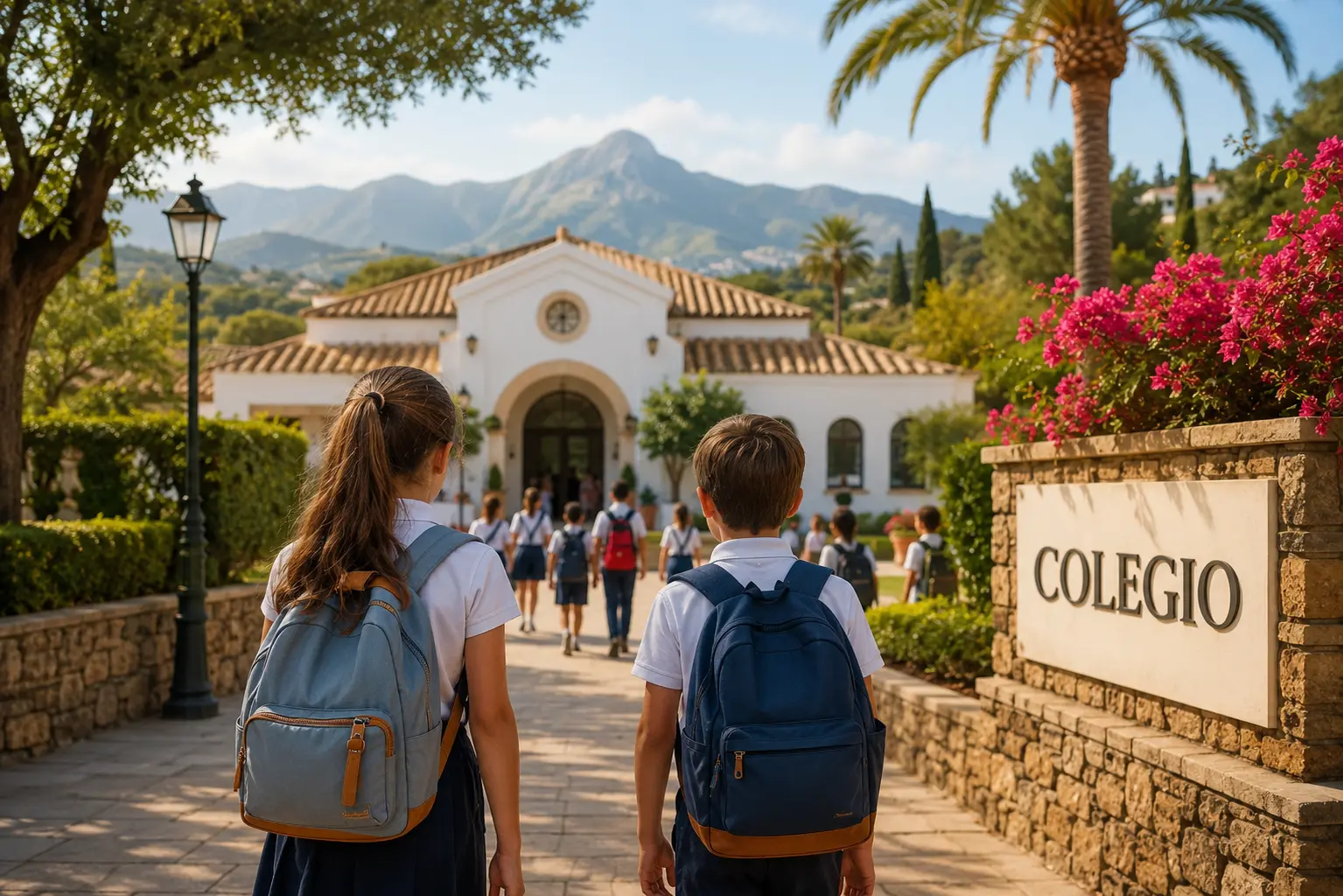
Key School Dates in Málaga Province for 2026/2027
The school calendar in Andalusia is set regionally and then adapted by province. For families in Benahavís and the surrounding Costa del Sol, the Málaga province calendar is the relevant reference for public and private non-university schools, although individual schools and municipalities may still have additional local variations.
| Date | What happens |
|---|---|
| 3 September 2026 | First Cycle Infantil begins |
| 10 September 2026 | Second Cycle Infantil, Primary and Special Education begin |
| 15 September 2026 | ESO, Bachillerato, Vocational Training, Adult Education and certain music, dance and arts courses begin |
| 21 September 2026 | Official Language Schools and Higher Artistic Education begin |
| 23 December 2026 – 6 January 2027 | Christmas holidays |
| 22–25 February 2027 | Semana Blanca in Málaga province |
| 26 February 2027 | Día de la Comunidad Educativa |
| 1 March 2027 | Día de Andalucía public holiday transferred from Sunday 28 February |
| 22–26 March 2027 | Semana Santa / Easter school holiday period, including Maundy Thursday and Good Friday |
| 24 June 2027 | Final teaching day for Primary and most remaining stages |
| 29 July 2027 | Final teaching day for First Cycle Infantil |
Dates are based on the official Junta de Andalucía Málaga province school calendar for 2026/2027. Families should always confirm with their individual school, as local holidays, inset days and international school calendars may vary.
The September Rhythm of School Life in Andalusia
One of the first differences many international families notice is the staggered return to school. Rather than every child starting on the same day, Andalusia brings different stages back gradually through September. This helps schools organise timetables, welcome younger children gently and manage the practical realities of warm early-autumn weather.
For children in Infantil and Primary, the return usually feels especially gentle. The first days are often focused on settling in, meeting teachers, finding classrooms, reconnecting with friends and adjusting again to school routines. Older students in ESO, Bachillerato and Formación Profesional usually return slightly later, with timetables, subject choices and transport arrangements becoming clearer during the first week.
On the Costa del Sol, September can still feel like summer. Mornings may be fresh, but afternoons can remain hot, which is why families often prepare for school in a slightly different way from northern Europe. Water bottles, breathable uniforms, sun protection, early bedtimes and a calm reintroduction to routine all help children settle more comfortably.
Semana Blanca and Local Holidays
For families new to Málaga province, Semana Blanca is one of the most important dates to understand. It is a distinctive school holiday in Málaga, usually falling around the end of February. For the 2026/2027 academic year, Semana Blanca is scheduled from 22 to 25 February 2027, followed by the Día de la Comunidad Educativa on 26 February and the transferred Día de Andalucía holiday on 1 March.
In practical terms, this creates a longer late-winter break for many families. Some use it for skiing in Sierra Nevada, short European trips, visits from relatives, or quiet time at home before the spring term gathers pace. For relocating families, it is worth adding Semana Blanca to the diary early, especially if both parents work or travel frequently.
Local holidays also matter. The Málaga calendar allows for municipal fiestas within the school period, up to a maximum of two days. In municipalities where local holidays do not fall on teaching days, alternative non-teaching days may apply, including 29 March 2027 and 3 May 2027 under the provincial calendar rules. This is one of the reasons parents should always check the calendar issued by their child’s own school and municipality.
Public, Concertado, Private and International Schools
Families moving to the Costa del Sol will encounter several types of school. Public schools are state-funded and follow the Spanish curriculum, with allocation usually linked to catchment area, family circumstances and available places. In Benahavís Village, CEIP Daidín plays an important role for local families, while surrounding municipalities offer additional public options depending on address and age group.
Colegios concertados are privately run but partially state-funded. They often follow the Spanish curriculum and may have a particular religious, bilingual or educational ethos. Costs are usually lower than fully private schools, but families should still ask about voluntary contributions, uniforms, comedor, activities and any additional services.
Private and international schools are especially relevant for families relocating to the Costa del Sol from the UK, northern Europe, the Middle East or the United States. The area around Benahavís, Marbella, San Pedro, Estepona and Sotogrande offers a wide choice of international education, including British, bilingual, multilingual and international curriculum pathways. These schools may follow a different academic calendar from the Junta de Andalucía, so families should check term dates directly with the school.
The right choice depends on more than curriculum. Language, commute, sibling places, examination pathway, pastoral care, sports, university ambitions and the child’s personality all matter. For some families, a Spanish school offers the quickest route into local life and language. For others, an international school provides continuity during a relocation or supports future university plans outside Spain.
The Cost of Returning to School
The cost of going back to school varies widely in Spain. A child in a local public school, a student in a concertado and a pupil at an international school will all have very different cost profiles. Uniforms, books, digital devices, stationery, comedor, transport and extracurricular activities can all add up, especially where several children are involved.
National consumer research for the previous 2025/2026 academic year placed the average annual school-related cost in Spain at around €2,390 per pupil, although this figure includes a wide range of expenses and varies sharply by school type. Public schools are usually the most economical, while private and international schools can represent a much larger annual commitment.
For public and concertado schools in Andalusia, the regional textbook programme can significantly reduce costs for compulsory stages. Families should still budget for stationery, school bags, sportswear, uniforms where required, technology, excursions and dining or transport services if used. For international schools, tuition fees, registration fees, uniforms, lunches, buses and activities should all be reviewed before enrolment.
As in previous years, many families are also taking a more practical and sustainable approach. Reusing uniforms, buying second-hand books where permitted, exchanging sports kit between families and waiting for the final school supply list before shopping can all reduce unnecessary spending.
Textbooks, Cheque-Libro and School Support
Andalusia has a long-standing programme for the free use of textbooks in compulsory education, often referred to through the Cheque-Libro or textbook gratuity system. For the 2026/2027 academic year, the Junta de Andalucía has published specific instructions for the regional free textbook programme.
The system is designed to support families and encourage the reuse of books across academic years. In practice, this means children may receive books through the school or a voucher system depending on the stage, school and year group. Families should follow the instructions issued by the school, as the process can vary depending on whether books are being renewed, reused or collected through a participating bookshop.
Beyond textbooks, families may also be able to access support for services such as comedor, aula matinal, school transport or extracurricular activities, depending on income, circumstances and the annual application process. These programmes are not automatic for every family, and the deadlines matter. Parents should check the Junta de Andalucía education portal, their school secretary and the school’s parent communication channels before the start of term.
School Transport and the Costa del Sol Commute
For families in Benahavís and the surrounding hills, the school run is often one of the most important practical considerations. The Costa del Sol offers excellent school choice, but the best school on paper is not always the easiest school in daily life. Morning traffic, mountain roads, the AP-7, the A-7, after-school clubs and sibling pick-ups all shape the family routine.
Public school transport may be available in certain circumstances, particularly where pupils attend their allocated school and live outside the immediate area. Private and international schools often operate their own bus routes, with stops across Benahavís, San Pedro, Marbella, Estepona, Guadalmina, Cancelada and nearby residential communities. Routes, pick-up points and timings should always be checked before making a final school decision.
Families living in hillside areas such as La Zagaleta, El Madroñal, La Quinta, Los Arqueros, Monte Mayor, Los Flamingos or Marbella Club Golf Resort should think carefully about the daily journey. A beautiful home and a wonderful school need to work together in real life, particularly during the first year of relocation.
For more local detail, you may also find our guide to school bus transport in Benahavís useful when planning the school run.
Climate, Heat and the First Weeks of Term
The return to school in Andalusia takes place while the region is often still very warm. September days can bring strong sun, high afternoon temperatures and the need for sensible routines around hydration, clothing and outdoor activity.
Schools across Andalusia have increasingly focused on adapting buildings and outdoor spaces to warmer conditions. Shaded playgrounds, improved ventilation, more efficient cooling, adjusted activity routines and careful attention to hydration all form part of the wider conversation around education in a changing climate.
For parents, the practical steps are simple. Children should return with a refillable water bottle, comfortable clothing where uniform rules allow, sun protection for outdoor time and a realistic bedtime routine in the week before term begins. After a summer of late nights and long evenings, sleep is often the quietest but most important part of a smooth return.
Relocating Families: What to Prepare Before September
For families moving to Spain, the school year is about much more than buying a pencil case. Documents, registrations, language support, residency status, health cards, transport and school admissions may all need to be arranged in advance.
For Spanish public and concertado schools, families may need documents such as passports or ID, proof of address, birth certificates, previous school records, vaccination records and, where relevant, NIE or residency documentation. Requirements can vary, so it is always best to check directly with the school or local education office.
For international schools, the admissions process is usually more direct but may include entrance assessments, interviews, school reports, language evaluation and registration fees. Popular year groups can fill early, especially in schools close to Marbella, San Pedro, Estepona and Sotogrande, so families planning a move should begin conversations well before the summer.
Language is another important consideration. Children entering the Spanish system often adapt quickly, but the first months can still be tiring. A calm home routine, realistic expectations and gentle language support can make a significant difference. Many families find that sport, music, clubs and friendships help language confidence grow more naturally than formal study alone.
Living Near School: Why Location Matters
For families choosing a home in Benahavís or the wider Costa del Sol, school access often becomes one of the most important lifestyle decisions. The right location can make mornings calmer, after-school activities easier and family life more balanced.
Some families prioritise proximity to a specific international school. Others prefer to be close to Benahavís Village, San Pedro, Guadalmina, Estepona or Marbella so that daily life feels more connected. A hillside villa may offer privacy and views, while a home closer to the coast may shorten the school run. There is rarely one perfect answer; instead, the best choice depends on the school, the family rhythm and how the home will be used throughout the year.
When viewing property, it is worth testing the school run at real times of day. A journey that looks simple at midday can feel very different at 8:00 in the morning. For families with children in different schools, the logistics become even more important.
Parents’ Back-to-School Checklist
A calm return to school usually begins with a little organisation. Before September, it is worth confirming your child’s exact start date, checking the school calendar, reviewing transport arrangements and making sure uniforms or clothing still fit after the summer.
Families should also check textbook instructions, order supplies only after receiving the official list, confirm comedor or school bus places where needed, and make note of local holidays, Semana Blanca and parent information evenings. For relocating families, documents, medical information and emergency contacts should be prepared before the first day.
Finally, remember that every school has its own rhythm. WhatsApp parent groups, school apps, email bulletins and noticeboards often become essential during the first weeks of term. Staying close to official school communication helps avoid confusion and makes the new academic year feel far more manageable.
A Softer Return to Routine
Back to school in Andalusia is not only a date in the calendar. It is a seasonal shift. The beaches become quieter, the evenings shorten slightly, sports clubs restart, and families return to a rhythm that balances education with the outdoor lifestyle that makes southern Spain so appealing.
For children, it is a time of new teachers, new friendships and new confidence. For parents, it is a moment to organise, plan and settle into the structure of the year ahead. And for families newly arrived on the Costa del Sol, it can be one of the clearest signs that Spain is beginning to feel like home.
With the right preparation, the 2026/2027 school year can begin calmly and confidently — with the practical details in place and the wider pleasures of family life in Andalusia still close at hand.
Back to School in Andalusia 2026/2027: Finding the Right Home Near the Right School
For many families, the right school and the right home need to work together. Tell us your preferred school, daily routine and lifestyle priorities, and we can send you a tailored selection of homes that match your family’s needs.
You may also wish to explore our dedicated school-location collections:
This guide is for general information only. School dates, admissions processes, transport arrangements, support programmes and individual school calendars may change. Families should always confirm directly with the relevant school, municipality or official Junta de Andalucía education source before making decisions.