Driving in Spain for Non-EU Visitors — Costa del Sol Guide (2026)

Exploring the Costa del Sol by car is one of the most enjoyable ways to experience Andalucía’s beaches, mountain roads, white villages and historic towns. Whether you are visiting from the UK, US, Canada or any other non-EU country, the rules for driving in Spain are straightforward once you know what to expect.
This guide focuses on the Costa del Sol, but the core rules apply across Andalucía and the rest of Spain. Below, you will find the essentials on licence rules, age requirements for car hire, insurance, mandatory safety equipment, speed limits and how to exchange your licence if you decide to become a resident.
In this guide:
Who Can Drive in Spain With a Foreign Licence?
Visitors from the UK, US, Canada and most non-EU countries can drive in Spain using their valid national driving licence for short tourist stays. The same basic rules apply whether you are exploring Marbella, Benahavís, Estepona or other parts of the Costa del Sol.
However, additional requirements can apply depending on your country of origin and the type of licence you hold.
UK visitors
- Modern UK photocard licences are accepted for short visits to Spain.
- An International Driving Permit (IDP) is usually only needed if you have an older paper licence or a licence issued in the Isle of Man, Jersey or Guernsey.
- Your licence must be valid and unexpired for the entire duration of your trip.
US, Canada and other non-EU visitors
- Many car hire companies in Spain ask US and Canadian visitors to present both their national licence and an IDP.
- Practically, carrying an IDP is strongly recommended even where it is not strictly mandatory.
- If your licence is not in the Latin alphabet, an IDP or official translation is generally required.
Whatever your nationality, your licence must be valid, legible and cover the category of vehicle you intend to drive. If in doubt, confirm the requirements directly with your chosen car hire company before you travel.
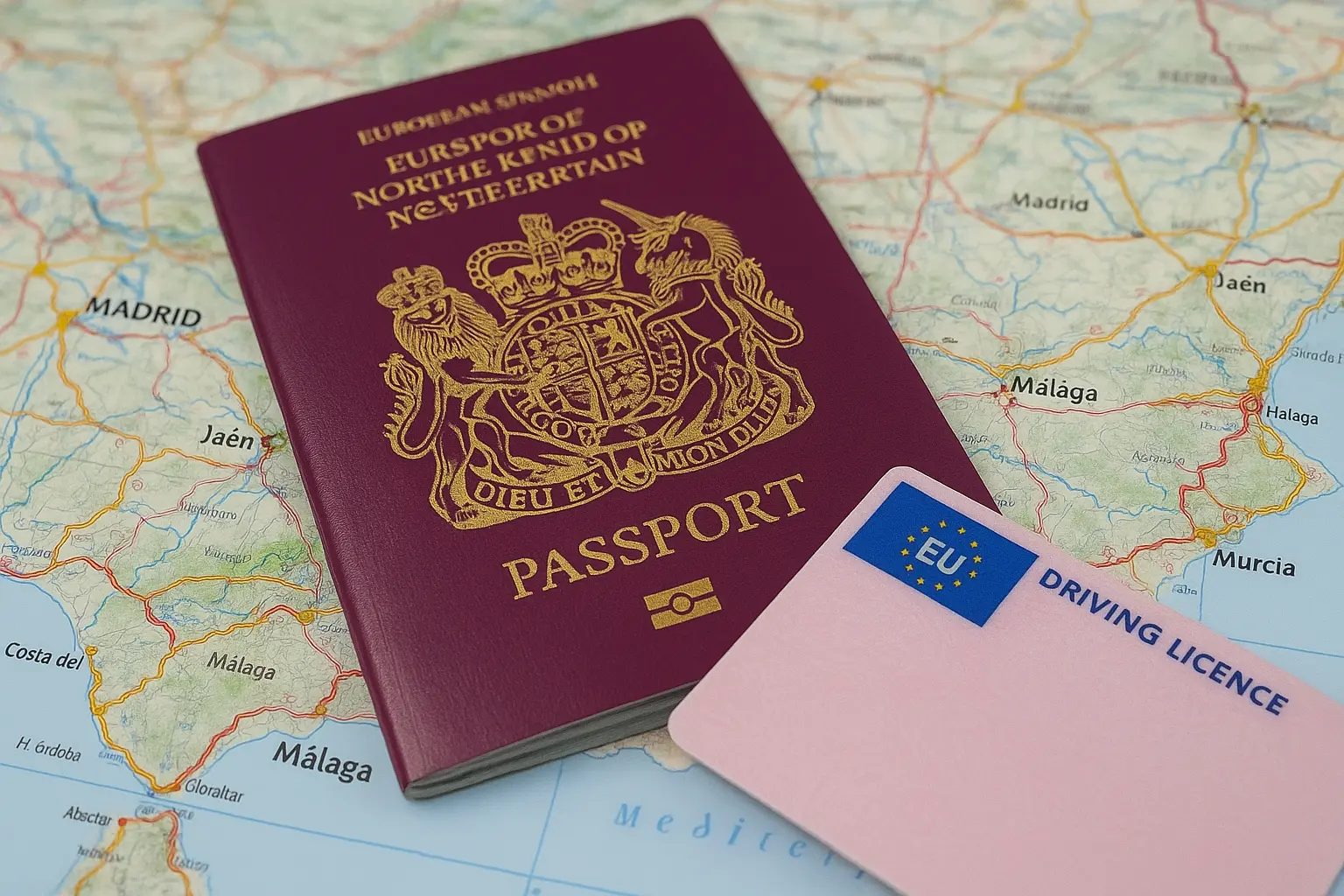
Key Driving Rules in Spain
Once you are on the road, driving in Spain is generally straightforward, but a few rules differ from the UK and North America. Understanding these in advance will make your Costa del Sol trip smoother and safer.
- Drive on the right-hand side and overtake on the left.
- Roundabouts: vehicles already on the roundabout normally have priority.
- Seat belts are compulsory for all passengers, front and rear.
- Using a hand-held mobile phone while driving is prohibited and heavily fined.
- Children must use appropriate child seats or restraints according to their height and weight.
You must carry your personal and vehicle documents with you at all times when driving:
- Passport or national identity document
- National driving licence (and IDP if required)
- Proof of insurance
- Vehicle registration document, or rental agreement if hiring
Mandatory safety equipment
If you are driving your own car in Spain, you are expected to carry:
- Reflective jackets for all passengers, accessible from inside the car
- At least one warning triangle (two are often recommended)
- Headlamp beam deflectors for non-EU right-hand-drive vehicles, if driving at night
Rental cars on the Costa del Sol usually come equipped with the required safety items, but it is still wise to check at pick-up.
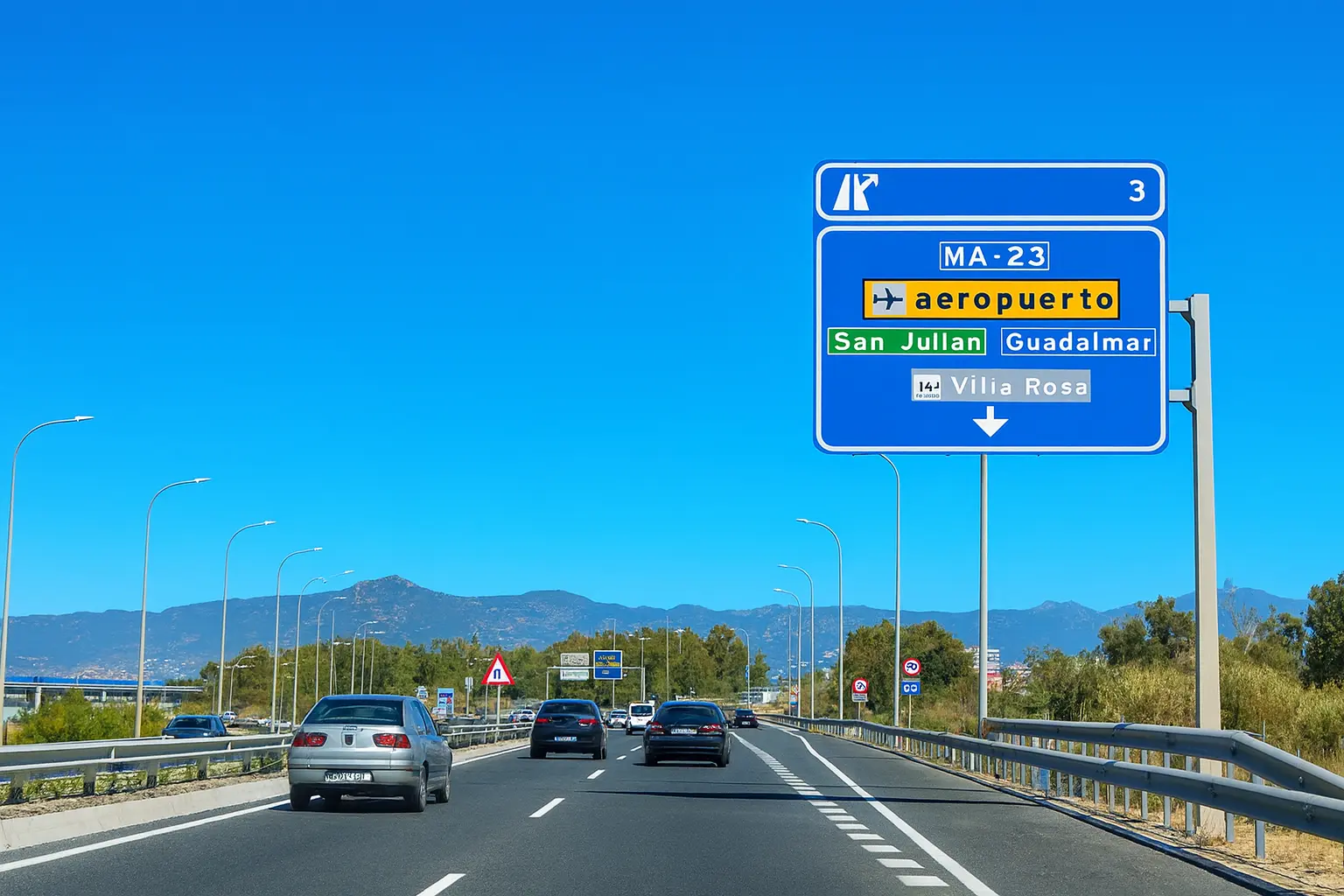
Speed Limits, Toll Roads and Low-Emission Zones
Spain’s speed limits are clearly signposted, but it helps to know the general rules before you set off from Málaga Airport or along the AP-7.
Typical speed limits
- Motorways (Autopistas / Autovías): 120 km/h
- Non-urban single carriageways: 90 km/h (sometimes 100 km/h where signposted)
- Built-up areas: 50 km/h
- Residential or calming zones: 20–30 km/h
Speed cameras are common. Fines may be applied on the spot for foreign drivers or sent later to your home address.
Toll roads on the Costa del Sol
Parts of the AP-7 and other sections of motorway near Marbella and Estepona operate as toll roads (peajes). You can usually pay:
- With cash or card at manned booths
- Automatically via Telepeaje / Via-T tags (often used by frequent drivers)
Low-emission zones (Zonas de Bajas Emisiones)
Major cities such as Madrid and Barcelona already operate low-emission zones where access is restricted based on a DGT environmental sticker (0, Eco, C or B). Foreign-registered vehicles cannot easily obtain these stickers, so access to certain central streets may be limited.
Málaga is progressively preparing its own low-emission measures. If you plan to drive into the very centre of larger cities, it is sensible to check the latest rules in advance or park outside the core and use public transport.

Driving a Foreign-Registered Car in Spain
Many visitors choose to rent a car locally, but some drive to Spain from their home country. In that case, you must pay close attention to insurance, stickers and safety equipment.
Insurance
Before you travel, confirm exactly what level of cover your policy provides:
- UK policies often include at least third-party cover for driving in the EU, including Spain.
- US and Canadian policies typically do not cover driving in Europe; you may need to rely on rental insurance or specific international cover.
- Consider adding comprehensive cover for extra peace of mind, especially if you are unfamiliar with the roads.
Stickers and vehicle requirements
- UK-registered cars must display a UK identifier; the old “GB” stickers are no longer valid.
- Ensure your number plates and any stickers are clearly visible and compliant with current rules.
- Check that you have warning triangles, reflective vests and beam deflectors where required.
Car Hire on the Costa del Sol: Age Limits & Practical Tips

Hiring a car at Málaga Airport or along the Costa del Sol is usually straightforward, but the small print matters—especially age limits and surcharges.
Typical age and licence rules
- Minimum age is often 21, with a full licence held for at least 12 months.
- Some vehicle categories (SUVs, premium or luxury models) require drivers to be 23–25+.
- Drivers under 25 frequently pay a young driver surcharge.
- In some cases, drivers over 75 may need additional cover or medical documentation.
Always read the rental terms before you book. If you are unsure, contact the rental company in advance to confirm requirements for your nationality and age.
Practical tips for Costa del Sol car hire
- Book well ahead for peak periods (summer, Christmas, Easter and long weekends).
- Check fuel policy—“full-to-full” is often the fairest option.
- Inspect and photograph the car at pick-up and drop-off, including wheels and windscreen.
- If you plan to explore inland villages, Ronda or mountain roads near Benahavís, consider a car with good torque and braking performance.
Becoming a Resident in Spain: Exchanging Your Licence

If you decide to make the Costa del Sol your long-term home, your status changes from visitor to resident, and the rules for driving on a foreign licence change as well.
Driving on your foreign licence as a resident
Once you become a legal resident in Spain, you can usually drive on your foreign licence for up to six months from the date your residency is recognised. After that, you are expected to exchange it for a Spanish licence or obtain a new Spanish licence via the theory and practical tests.
Licence exchange agreements
Spain maintains reciprocal agreements with certain non-EU countries and regions:
- UK: A full reciprocal agreement allows most UK licence holders to exchange without taking a driving test, provided the licence is valid and meets the criteria in force.
- US & Canada: Exchange options depend on specific states or provinces; in some cases, you may need to take Spanish tests if there is no direct agreement.
- Other non-EU countries: Eligibility varies; always check the current list on the DGT website or speak to a gestor (local administrative adviser).
Documents typically required include:
- Valid foreign driving licence
- Proof of residence in Spain (e.g. TIE card)
- Passport or national identity document
- Application form and payment of the corresponding fee
- A basic medical and eyesight check (psicotécnico)
Procedures and fees can change, so it is wise to confirm the latest requirements with the DGT or an experienced gestor before you book appointments.
FAQs: Driving in Spain as a Non-EU Visitor
Do I need an International Driving Permit?
It depends on your country and your rental company. UK visitors with modern photocard licences generally do not need an IDP for short trips. Many US and Canadian visitors are asked to present one, and travellers from countries using a non-Latin alphabet almost always need an IDP or official translation. If in doubt, obtain an IDP before you travel.
Can I keep driving on my foreign licence after becoming a resident?
Only for a limited period. Typically, you may drive for up to six months from the date you become resident. After that, you must exchange your licence or obtain a Spanish one, depending on the agreement between Spain and your home country.
What safety equipment must I carry?
At minimum, expect to carry reflective vests for occupants, at least one warning triangle and, for non-EU right-hand-drive cars, headlamp beam deflectors if using your lights. Rental cars usually include these items, but it is worth checking at pick-up.
Are there strict drink-driving rules?
Yes. Spain’s drink-driving limits are stricter than in many countries, and enforcement is taken seriously. The safest approach is simple: if you are driving, avoid alcohol altogether.
How do I handle parking on the Costa del Sol?
In resort areas, you will find a mix of free street parking, blue-zone paid areas with time limits and underground car parks. Always check the signs carefully and pay attention to local rules, especially during busy summer months and major holidays.
Key Takeaways for Non-EU Visitors Driving in Spain
For most non-EU visitors, driving on the Costa del Sol is a straightforward and enjoyable way to explore Andalucía. With a valid licence (and IDP where required), adequate insurance, the right safety equipment and an understanding of speed limits, toll roads and low-emission rules, you can drive with confidence.
Regulations and bilateral agreements can evolve, so it is sensible to double-check official guidance from your home country and the Spanish DGT shortly before you travel. Taking a few minutes to prepare will help you focus on what really matters: enjoying the sunshine, scenery and lifestyle that make the Costa del Sol such a sought-after destination.